The tap
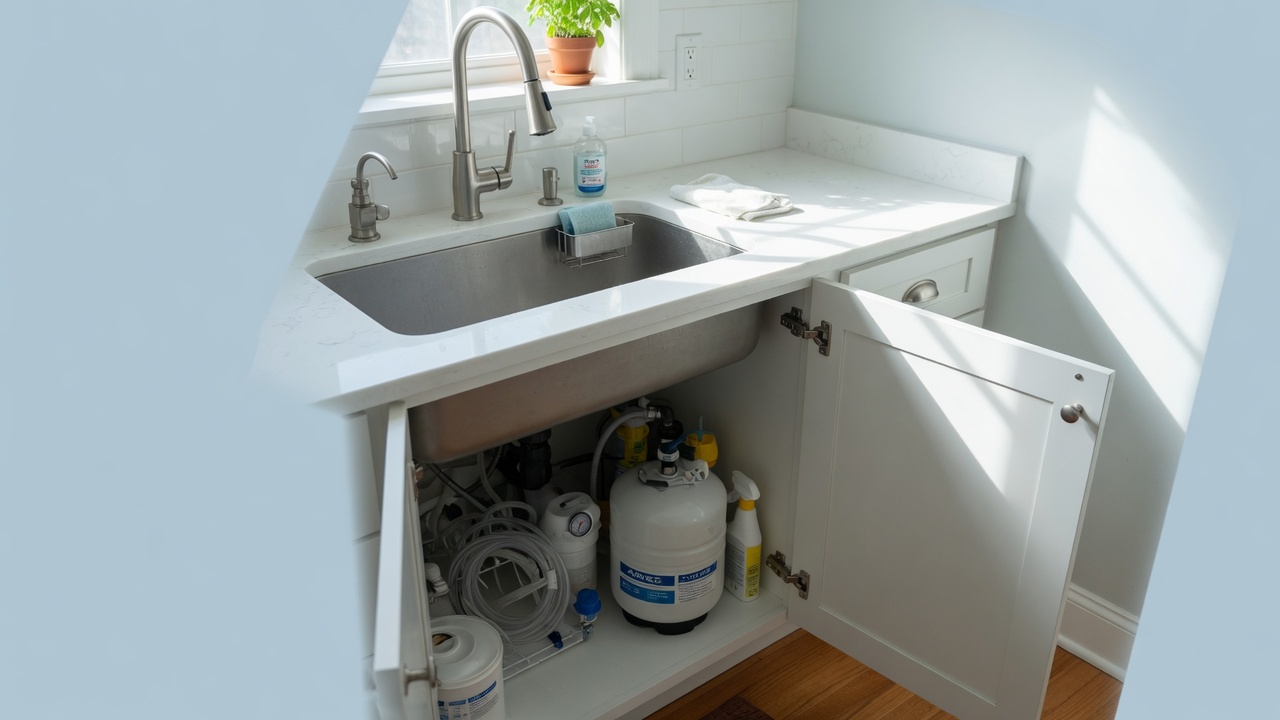
Crawl under the sink. The sticker is the shopping list.
Photograph the model on the housing you already own. The button is reverse-osmosis replacement parts listed by brand — not a first box, not a furnace pad, not a grocery puck. Buy sediment, carbon, and the membrane together.
Updated 2026-09-15 · Pipedeck
| Grocery puck or fridge pitcher | Yearly reverse-osmosis parts | A new under-sink unit | A commercial membrane | |
|---|---|---|---|---|
| PFAS (PFOA / PFOS) | Usually not certified | Only if the housing you already have was built for it | Shop the first box, not this aisle | Wrong machine |
| 1,4-dioxane | No | Needs the membrane in the set | That first housing lives on another guide | Not this kitchen |
| Buy if | Taste and chlorine | The extra faucet is already on the sink | The cabinet is empty | Never, from this page |
| This Saturday | Wrong aisle | Search the sticker; buy sediment, carbon, and the membrane | Wrong year | Wrong scale |
Who should crawl under the sink this Saturday
This Saturday is for a Long Island kitchen that already treats the drinking tap. The extra faucet is on the deck. A housing and usually a small tank sit in the cabinet. Morning coffee still comes from that little spout. You are not shopping a machine. You are shopping the parts inside the machine you already own.
Bring a phone under the sink. Photograph the sticker on the housing and the numbers on the old cartridges before you stand up. That photo is the shopping list. If the last date marker smeared, write a new one after you change the stack. Carbon still loads when the kettle tastes fine. Sediment still clogs after a brown-water week. The membrane still ages behind those stages. A second whole system does not fix a spent stack.
If the cabinet is empty, stop. Parts for a box you do not own are cardboard. Shop a PFAS filter first if forever chemicals are the job, or reverse osmosis for 1,4-dioxane if that molecule is why you are shopping. Come back when the housing is in. A jug on the fridge door is still an empty cabinet for this guide. Taste is not an under-sink stack, and it is not 1,4-dioxane treatment.
A water-district bill does not retire the set. Nassau kitchens are almost all on a main. Many Suffolk kitchens are too. The plant treats on the way in. The extra faucet still runs through stages that load up. A flyer, if one ever existed, paid the housing once. This site will not invent a Suffolk coupon. This year is still the parts.
What the button actually opens
The hop is a reverse-osmosis replacement aisle, not the shop's front door. Brand collections sit at the top. Popular rows under them mix kitchen cartridges, membranes, and some yearly kits — plus commercial membranes rated in hundreds or thousands of gallons a day. Stay on drinking-water media for the housing you already own. Search the model from the sticker. Do not start at the first tile because it was cheap.
A heading for whole reverse-osmosis systems on the same shop is the first-box Saturday. That box belongs on the PFAS page or the 1,4-dioxane page, not in this cart. A countertop machine with instant hot water is the same miss. Spare membranes and carbon packs at the cheap end are year two only if they match the housing. Do not buy a loose membrane as a first box. Do not buy a three-pack of jug discs and call the extra faucet serviced.
Many drinking-water rows on that hop list in stock and ship in one business day. Some rows say special order and sit five or six days. Some are out of stock. Do not wait on a missing photograph. Long Island is ordinary ground in the lower forty-eight. Confirm the ship date on the listing you actually add.
That catalog lists free shipping on many drinking-water orders over $99, in the lower forty-eight states. Hawaii, Alaska, and addresses outside the United States are not that offer. Eligible unused items can return for 365 days; installed or damaged cartridges are not that window. Prepaid return labels are for the contiguous United States. Original outbound shipping is not refunded. A club plan that cuts later orders and adds free shipping on those club shipments is optional. Auto-delivery can send a carton you did not mean to order this month. Pipedeck does not set their cart. Confirm shipping and returns before you pay.
Match the sticker, then the stack
Search the brand list with the number from the housing, not with a guess from a neighbor's carton. This guide does not rank brands and does not look up numbers for you. The faded print on the old drop-in beats a pretty grid photo.
Reverse osmosis is a short train: sediment, then carbon, then a membrane, then sometimes a last polish. The cart has to cover that train. If the extra faucet and a small tank are in the cabinet, you almost certainly have reverse osmosis. Buy sediment, carbon, and the membrane together. Carbon-only under-sink blocks exist. They are yearly cartridges for a carbon housing you already installed, and only if that housing was the certified kind for PFAS. They are not a reverse-osmosis set. They do not do the 1,4-dioxane job.
A four-stage or five-stage kit is still sold for one housing. Length matters. A ten-inch drop-in is not a twelve-inch drop-in. A twist-lock fridge cartridge is not an under-sink thread. Some membranes are reverse-seal. They will not drop into a standard sump even if the gallon rating looks close. Read the listing before you add it.
Follow the calendar on your housing. Some makers want sediment twice a year and the membrane every two or three. This guide still uses a yearly set so a spent prefilter does not sit in front of a membrane you paid for. Certification is not a lifetime. A used-up block is not NSF 53 or P473 just because the empty housing once was. A compatible carton that says it meets or exceeds the original is the shop's copy. This site did not run that lab.
Flaws of the cheap swap
The conversion trap on this hop is the cheapest tile. A sediment puck looks filthy, so it goes in the cart. The membrane looks white, so it stays. 1,4-dioxane treatment is the membrane. A carbon-only change with the old membrane left in is how a household says the filter was changed when the treatment was not.
Spent carbon has a second cost. Chlorine that the prefilter used to catch can reach a thin-film membrane. That is how a membrane dies early, quietly, while the extra faucet still fills the kettle. Changing the whole yearly stack is cheaper than guessing which stage failed after you skipped a year.
Do not skip a year because the water still tastes fine. Taste is not PFAS. Taste is not 1,4-dioxane. A cheap dissolved-solids pen is not those tests either. It can hint that a membrane is passing more solids than it used to. It cannot tell you the carbon is still doing the certified job. Follow the sticker, not the coffee.
A trickle at the extra faucet is usually spent media, not a dead housing. Change the parts that belong to the unit you already own. A slow drinking faucet is not a reason to shop a whole new box. If the main kitchen tap is also slow, that is the house plumbing, not these cartridges.
Unopened spares are not immortal. Keep them dry, off a freezing garage floor, and out of summer heat. Use them by the date on the wrap if there is one. A damp-basement spare is not this year's certified set. Buy the box you will actually install this year. Do not stock a decade of membranes.
If a water district posted a boil-water notice, or the tap ran brown after a main break, treat the cartridges as used once the notice lifts and the main tap runs clear. Do not rinse a loaded block and call it this year's set. Saturated carbon is not the certified filter you paid for. An exhausted prefilter is not 1,4-dioxane treatment.
What this Saturday is not
Do not buy a second whole system because a year passed. The housing you already own is the machine. This year is media. Do not buy cartridges if the cabinet is empty — that first box lives on the PFAS page or the 1,4-dioxane page. Do not buy a fridge-door cartridge as a stand-in for the under-sink stack. A fridge-line filter that prints NSF 53 can be yearly media for a fridge housing that already exists. It is not a substitute for the first PFAS unit, and it is not 1,4-dioxane treatment.
Do not buy a plumber for a normal swap. Shut the feed, open the drinking faucet to drop the pressure, change the stack the way that model is built, check the O-rings, turn the feed back on, and watch for drips. Call the person who installed it if a fitting cracked, the tank leaked, or the unit was never plumbed. Do not force a cartridge that does not seat. Wrong length and wrong thread are how a Saturday becomes a leak tray.
Do not wander into furnace pads, pool cartridges, or pitcher refills because the same shop sells them. Do not treat a commercial membrane as a kitchen upgrade. Do not treat a shop claim that a generic cartridge meets or exceeds the original as a lab this site ran. Match the sticker. Buy the stack. Confirm shipping and returns before you pay.
The button below goes to reverse-osmosis replacement parts for a unit you already own. Stay on drinking-water media for that housing. If the cabinet is empty, use the links at the bottom instead.
If you buy through a link on this page, we may earn a commission. How that works
The first box and the well kit are other Saturdays
New York limits PFOA and PFOS to 10 parts per trillion. That is why a lot of Long Island kitchens added a real filter. The marks that speak to those chemicals are NSF 53, NSF P473, or reverse osmosis. Read them on the carton of the unit you already bought, then buy the parts that unit uses. A line that only says it filters water is not those marks. If you still need the first unit, start on the PFAS filter guide.
1,4-dioxane is a different molecule. Pitchers do not take it out. Reverse osmosis is the usual treatment. If you bought reverse osmosis for that chemical, the yearly box has to include the membrane. A grocery carbon puck is a refund on that job. If the housing is not in yet, start with the 1,4-dioxane reverse-osmosis guide.
If a water district, a county, or a utility ever put money toward a filter, that money paid the housing once. It does not refill the cartridges. It does not restore a spent block. A later flyer still pays the box once. This year is still the parts.
Suffolk still has tens of thousands of private wells. Nassau almost does not. If you do not get a water bill from a water authority, treat the tap as a well. A filter is not a lab result. If the well has never been measured, test it before you buy a second box. Use a lab kit that looks for PFAS and 1,4-dioxane. A $12 hardware-store strip will tell you hardness or chlorine. It will not tell you those chemicals. Suffolk also sells a $100 well test (631-852-5810). That county test is cheaper, and it looks at different things. It is not this cartridge set, and this site is not that office. If you are on public water, yearly cartridges can still be the next buy. Same rule: the unit first, then the set.
Common questions
The sticker faded. How do I shop this hop?
Look on the housing and on the old cartridge. Photograph whatever numbers remain. Search that model in the brand list on this hop. Reverse osmosis still needs sediment, carbon, and the membrane together. This guide does not look up numbers for you.
Can I swap only the dirty-looking stage and leave the membrane?
Not if this unit is reverse osmosis. The membrane is the stage that does the 1,4-dioxane job. A cheap prefilter swap with the old membrane left in is how a household thinks the filter was changed when the treatment was not. Buy the stack together.
Whole reverse-osmosis systems sit on the same shop. Is that this Saturday?
No. This URL is yearly media for a housing already under the sink. A first box lives on the PFAS page or the 1,4-dioxane page. A whole system, or a countertop machine with instant hot water, is the wrong year.
Some membranes are rated in thousands of gallons a day. Are those for a kitchen?
No. A Long Island drinking faucet is a household membrane, usually tens of gallons a day. Listings in the hundreds or thousands of gallons, at hundreds of dollars, are commercial. Leave them. Stay on the part that matches the sticker.
Will a cheap four-stage kit fit any reverse-osmosis housing?
No. A kit is still sold for one housing. Length matters. A ten-inch drop-in is not a twelve-inch drop-in. A twist-lock fridge cartridge is not an under-sink thread. Some membranes are reverse-seal and will not drop into a standard sump. Match the set to the model you already own.
A listing says special order. Do I still get it this week?
Usually not. In-stock drinking-water media on this hop often ships in one business day. Special-order rows can sit five or six days, sometimes longer. If the carton you need is out of stock, do not wait on the photo. Search the same model again, or wait until it is actually listed in stock.
Does free shipping cover a single cheap sediment puck?
Free shipping is listed on many drinking-water orders over $99, in the lower forty-eight states. A lone cheap puck may sit under that line. Hawaii, Alaska, and addresses outside the United States are not that free-shipping offer. Confirm at checkout. Pipedeck does not set their cart.
I already opened the wrap. Can I still use the 365-day return?
Usually no. The 365-day window is for eligible items, unused, with original packaging. Installed or damaged cartridges are not that window. Prepaid return labels are for the contiguous United States. Original outbound shipping is not refunded. Confirm both at checkout.
Should I enroll in auto-delivery so I never forget a year?
Optional. A club plan can cut a later order and add free shipping on those club shipments. It can also ship a carton you did not mean to order this month. If you only wanted this year's set, skip the club, or cancel it in the account after the first box.
Compatible cartons say they meet or exceed the original. Is that a lab we ran?
No. That is the shop's compatible-brand copy. This site did not test those cartons. Match the sticker. Buy sediment, carbon, and the membrane for that housing. Read any NSF mark on the wrap you actually receive.
There is no extra faucet and the cabinet is empty. Is this still the buy?
No. Get the unit first. NSF 53 or P473, or reverse osmosis, for PFAS. Reverse osmosis for 1,4-dioxane. If the house drinks a Suffolk private well and you have not tested, test first.
Can the fridge pitcher stand in for this year's under-sink set?
No. A pitcher is not a reverse-osmosis replacement set. It will not treat 1,4-dioxane, and most pitchers are not NSF 53 or P473 for PFAS.
A district once put money toward the filter. Do I still buy cartridges?
Yes. That money bought the box once. It does not refill sediment or carbon, and it does not buy a new membrane. This site will not invent a Suffolk coupon.
After brown water or a boil-water notice, is the old stack still good?
No. Once the notice lifts and the main tap runs clear, treat the cartridges as used. Do not rinse a loaded block and call it this year's set.
New York's drinking-water limit is 10 parts per trillion for PFOA and PFOS. Look for NSF 53 or P473, or reverse osmosis, for PFAS. Reverse osmosis for 1,4-dioxane. Shop listing: free shipping on many drinking-water orders over $99 in the lower forty-eight; 365-day returns on eligible unused items — confirm at checkout.