The car
The school-drop windshield still needs a front camera
Two cars in the driveway is how the week holds. The first button is a front-only 4K unit for the glass that still does drop-off — not a matching pair, and not a newer loan.
Updated 2026-09-15 · Pipedeck
| Front-only 4K dash cam | Jumper pack and inflator | |
|---|---|---|
| Job | Records the lane in 4K from the windshield | Starts a dead battery; airs a soft tire |
| Buy first if | This car still mixes parkways, the Expressway, and other people’s brake lights | This car still sits in school and store lots and has to start on a Tuesday |
| Skip if | It barely leaves the block, or a front camera is already looping | A charged pack and a gauge already live in that trunk |
| Will not | See the rear bumper, change 118, or cut a premium | Replace a spare you have never practiced, or a tow from the shoulder |
| Live hop | First button — front-only 4K collection | Second button — pack and inflator |
This Saturday is the car that still has to leave
Someone still has a job that is not on the train. Someone still has a drop. Someone still has a Tuesday appointment two towns over. Two cars in that driveway is how the week holds. The first buy on this URL is a camera on the glass of the car that actually leaves — not a kit for both, not a matching pair still in tabs, not a newer loan to postpone a $210 windshield unit.
Long Island households keep about 2.3 to 2.6 cars. Outfit the one that does school, work, and the store. A short-trip car still earns a pack and an inflator later. A dead battery in a district lot does not care that you were not going into the city. The camera matters more on the car that mixes the Expressway, Sunrise, and other people’s brake lights. If you only buy one unit this weekend, it goes on that glass. A camera stored “for both” in the garage is a camera you will not have at 7 a.m.
In 2024, 118 people died in traffic in Suffolk and 67 in Nassau. New York’s injury reports sit near 58 in Suffolk and 38.4 in Nassau. Those are two columns. Do not add them. Suffolk also has more residents — about 1.55 million in 2025 against about 1.40 million in Nassau — but not by the same ratio as 118 to 67. This page does not invent a per-person rate the public tables did not publish. A camera does not shrink those counts. It sits on the glass of the car you already drive.
A monthly ticket on the farther Long Island Rail Road zones ran about $357 to $395 in January 2026. The railroad gets you to the city. It does not pick up a child at 3:15. It does not sit in a medical office park with no station. It does not replace the second car for the rest of the week. Outfit the car that rolls out first.
If the decision is already to go, this page is the wrong room. The moving guide is packing for a load day. If the house is staying and the bay is a pile, the garage guide is steel cabinets that unfold. Those are other jobs. This one is the windshield that still faces the lane.
How to pick a front-only 4K camera
The first button lands on a front-only 4K collection. That is one channel, aimed at the road, at 3840 by 2160. You are not buying a motorcycle camera. You are not buying a four-channel truck kit. You are not buying a cabin camera for a rideshare you do not run. Start with the glass in front of the driver.
On that collection, the household start is the mini 4K unit listed around $210. Their copy for that camera is 4K at 30 frames — not 60 — a Sony STARVIS 2 8-megapixel sensor, HDR with an F1.8 lens and a 140-degree field of view, Wi-Fi 6, built-in GPS, Bluetooth, and voice control. Buffered parking mode with auto event detection is on the same listing. That is drive recording first. Parking is extra wiring, not the reason to skip the camera. A polarizing filter is listed in that box. Do not buy a second one to postpone mounting.
The next step up on the same collection is listed around $310: same 4K HDR front class, same night-vision sensor family, dual-band Wi-Fi, GPS, and buffered parking. Their shop also sells a two-channel and a three-channel edition of that line. Stay on the front-only edition unless you already decided to run a cable to the rear glass this weekend. The three-channel listing is sold for rideshare and fleet. That is not a school-drop windshield.
The top front-only listing on that hop is around $380: 4K at 60 frames, Wi-Fi 6, HDR, support for an external SSD, low-power impact detection, and hybrid parking recording. Buy that class if you actually want parked recording and extra storage. Do not buy it to postpone a $210 camera that would already be looping on Tuesday.
There is also an older 4K front camera on the same collection. It has shown as sold out. Do not wait on a sold-out row. Confirm the live price and stock when you land. Pipedeck does not set their cart.
A card is not in the camera box. Buy a card made for cameras on the same hop — their industrial-grade cards are sold as U3, A2, V30, in 64, 128, 256, and 512 GB. A leftover phone card is how 4K recording dies in a week. Set the unit to loop so new video writes over the oldest files. If a parking-lot bump matters, lock that clip the same day.
That shop lists free shipping with a tracking number, ships in about two business days, a 14-day return window, and an 18-month warranty on the camera. Twenty-four months is only if you register the body with them. Accessories are listed at twelve months. Confirm those lines at checkout. That is their policy, not a Pipedeck desk. We do not install cameras and we do not take returns.
Front-only 4K dash camJumper pack / inflator
Flaws you should know before you click
A front-only camera does not see the rear bumper. If someone kisses the hatch in a supermarket row, this unit will not have that clip unless you later add a rear camera and run the cable. The hop is front-only on purpose. One clear view of the lane is the job that actually gets done.
A plug in the 12-volt socket is enough while you drive. When you kill the ignition, that socket usually dies, and so does recording. Parked recording wants a hardwire kit to an always-on fuse, or a separate camera battery pack sold on the same shop. Their hardwire kits are model-specific. Match the kit to the camera body. Have someone who knows the fuse box do that job so you do not knock out a circuit the kids’ seats also use. July heat on a Long Island dash is hard on cheap cells. Units in this class are built to sit on glass. Shade the windshield when you can. Do not leave the camera sitting on the dash as a loose brick.
Buffered parking and auto event detection still need power after you park. Time-lapse and low-bitrate modes stretch a card. They do not replace a hardwire. They also do not replace looking at the lot before you walk away.
A camera does not make Sunrise safer. It does not change how a school bus stops. It does not replace slowing down on wet leaves in October, or leaving more space on the Expressway when brake lights stack. Some Long Island ZIP codes saw auto insurance jump about 80 percent from 2019 to 2025. The word is some, not every town. A dash cam will not lower that premium just because it sits on the glass. Do not buy one as a coupon. Footage is not a policy. Buy it for the record if something happens, then keep paying the bill you already have.
Voice control and a phone app are conveniences. They are not the footage. If Wi-Fi pairing fails in a district lot, the card still has to have the file. Check that the unit is actually recording after you mount it. Wipe the glass in front of the lens when you fill the tank. A film of winter grit is a camera that was never on.
The 18-month warranty is the merchant’s coverage, not a Pipedeck promise. The extra six months is theirs, and only if you register. The 14-day window is theirs. Confirm both. A Bluetooth remote is optional. An SSD on the top listing is optional. None of those extras replace a camera that is already looping.
How you mount it so the footage is usable
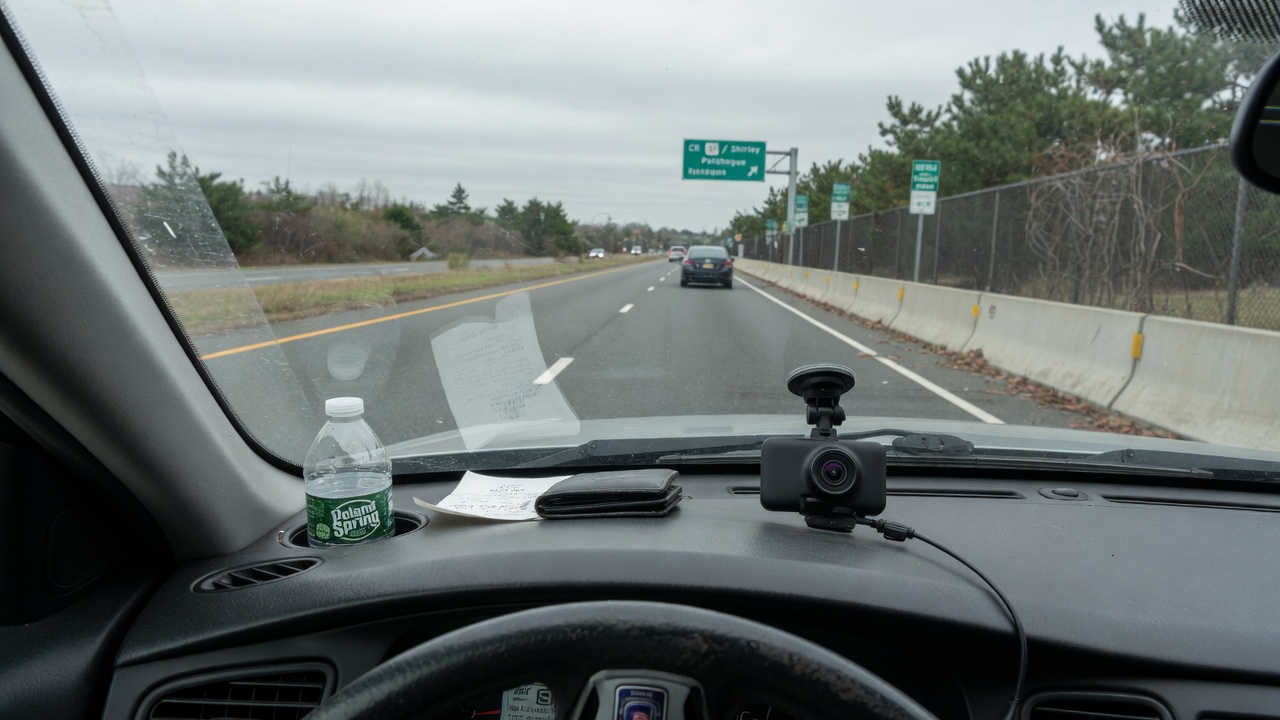
Mount it high, just off the rearview mirror, out of your eyeline. The hood should be a thin strip at the bottom of the frame. Sky should not be most of the picture. Point it at the lane. You are not filming the family. Clean the glass first. Press the mount onto glass that is not freezing and not 90 degrees from sitting in July sun for an hour. Give the adhesive a real set before you slam the door.
Route the power cable along the headliner and the A-pillar trim, not across the windshield. A dangling cord is a ticket and a distraction. The 12-volt plug is the first week. Hide it so a backpack does not yank the camera off the glass. If you later hardwire, that cable follows the same path to the fuse box, not a new scar across the dash.
Use a card made for cameras. Format it in the unit. Loop recording is the default you want. Check one clip on a phone the same day you mount it — daytime on the parkway, and one night clip if this car still rolls after dinner. If the plate in front of you is mush, aim again before you trust the file.
One camera already recording in the car that does school, work, and the supermarket is worth more than three cameras still in boxes. If a second car also does real miles — a late shift, a Tuesday appointment two towns over, a weekend farther east — add a second front-only unit when you can. Do not wait for a matching pair.
The jumper pack and the inflator
The second button is a jumper pack and a tire inflator. That is a different hop from the camera. Keep both in the trunk of the car that leaves, not in the garage “for whoever needs it.”
A jumper pack starts your own battery without waiting for another car. Cables still help if someone is already in the lot. The pack is the one that works in a district parking lot before 7 a.m., when the next open bay is a long walk. Keep it charged. Packs that sit from Labor Day to February are the ones that fail in a supermarket row. Twice a year — when the clocks change, or when the scraper goes back in the door — put the pack on charge and test the light in the tote.
A tire inflator with a gauge is the Sunday tool. Long Island driving mixes the parkways, the Expressway, Sunrise, and local roads that take sand, salt, and freeze-thaw. A slow leak on a Sunday is a household problem. An inflator in the trunk is cheaper than a wrecker for a tire that only needed air. Use the number on the door sticker, not the number molded into the sidewall. Winter freeze-thaw opens the same pothole on the same local road every February. Sand on the parkway does the rest.
Then a small tote that stays in the car: a flashlight, a basic first-aid pouch, an ice scraper, a pair of work gloves, a blanket, and a bottle of water. January wants the scraper. July wants the water. None of it needs a brand story. Leave it there. If you have a spare, know where the jack lives. If you have never used it, keep the inflator and a roadside membership anyway.
Summer heat cooks a jumper pack left on a seat. Put the pack in the tote, not on the parcel shelf. Keep the scraper in the door in December. None of this is a hobby aisle. It is the same unglamorous hardware as a spare fuse in the kitchen. Put the camera on the glass. Charge the pack when you change the clocks. Leave the inflator in the trunk. Leave the tote in the car all year.
What not to buy this weekend
Do not tape a phone to the glass and call it a dash cam. Do not buy a 1080p toy with no loop and no card class that can hold 4K. Do not buy a three-channel cabin kit for a household that is not running a fare. Do not buy the motorcycle camera. Do not buy a four-channel trailer setup for a sedan that does school. Do not buy a rear camera you will not fish through the headliner this month. Do not wait on the older 4K row if it is sold out.
Do not buy a jumper pack as a garage ornament. If it lives on a shelf “for both cars,” it will not be in the lot at 7 a.m. Do not buy cables only and skip the pack — cables need a second car that is already there. Do not buy an inflator with no gauge and then guess from the sidewall. The number you want is on the door sticker.
Do not buy a camera because you think it will cut the insurance bill. Do not buy a newer vehicle to postpone a $210 windshield unit. Do not store the tote for both cars. Do not wait for a matching pair of cameras before the first one goes on the glass. Start with the car that leaves.
If standing in the hall bath is the hard part of staying, that is a different Saturday, not this page. If prices already decided the move, that is packing week. If the tap is the actual question, that is a different guide. A dash cam does not sample a well.
Front-only 4K dash camJumper pack / inflator
If you buy through a link on this page, we may earn a commission. As an Amazon Associate we earn from qualifying purchases. How that works
Common questions
Who is this Saturday actually for?
A house that is staying, with two cars in the driveway and a morning that still has a drop. Outfit the windshield that leaves. If the truck is already booked, this is the wrong page.
Which car gets the first camera?
The one that does school, work, and the store. Households here keep about 2.3 to 2.6 cars. A camera stored for both in the garage is a camera you will not have at 7 a.m.
Why front-only 4K, not 2K or three channels?
The first job is a clear view of the lane. This hop is the front-only 4K collection, not a 2K mini and not a three-camera rideshare kit. A rear or cabin unit is optional later, after the first camera is looping.
Is 4K at 30 frames the household start, or do I need 60?
The household start is listed at 4K and 30 frames, around $210. Sixty frames sits on a higher listing around $380. Buy 60 if you actually want parked recording and extra storage. Do not buy it to postpone a camera that would already be looping on Tuesday.
Does that camera box include a card?
No. Buy a card made for cameras on the same hop — industrial-grade cards sold as U3, A2, V30, in 64, 128, 256, and 512 GB. A leftover phone card is how 4K recording dies in a week.
Will a dash cam lower a Long Island insurance bill?
Do not count on it. Some Long Island ZIP codes saw auto insurance jump about 80 percent from 2019 to 2025. Buy the camera for footage, not for a discount.
Do I hardwire it the same Saturday I mount it?
Not for ordinary drive recording. A plug in the 12-volt socket is enough while you are moving. Parked recording wants a hardwire to an always-on fuse, or a dedicated camera battery pack, so the unit stays on after you kill the ignition. Match the kit to the camera body.
Should I wait on the older 4K row if it looks cheaper?
No. That older 4K front camera has shown as sold out. Do not wait on a sold-out row. Confirm the live price and stock when you land. Pipedeck does not set their cart.
Where does the jumper pack live if two cars share a garage?
In the trunk of the car that leaves, not on a shelf for whoever needs it. The pack starts your own battery when nobody else is in the lot. Keep it charged. They drift down if they sit for months.
Does a monthly LIRR ticket replace this camera?
Not for most houses. A monthly ticket on the farther Long Island Rail Road zones ran about $357 to $395 in January 2026. The train is a ride into the city. It does not do the school drop, the grocery run, or a Tuesday appointment in the next town.
Is the camera warranty 18 months or 24?
Eighteen months on the camera is the listed default. Twenty-four months is only if you register the body with that shop. Accessories are listed at twelve months. That is their coverage, not a Pipedeck promise. Confirm it at checkout.
What will a front-only camera not do?
It will not see the rear bumper. It will not change 118 traffic deaths in Suffolk or 67 in Nassau. It will not cut a premium. It will not replace a spare you have never practiced, or a tow from the shoulder.
New York traffic deaths, 2024; New York injury reports; LIRR monthly fares, January 2026; Census population, 2025. Front-only 4K collection prices, sensors, shipping, returns, and warranty from that hop’s listed copy. Jumper pack and inflator on the second hop. Not a DMV, not a claims desk, not a per-person rate.